A Parent’s Guide to Children’s Dental Health in Greenspoint
15 Jan 2026
Does my toddler really need to see a dentist already? When will that first tooth even show up? As a parent, navigating your child’s dental health can feel like a maze of questions and milestones, all on top of your already packed schedule. We’re here to clear up the confusion and give you a simple guide to build a lifetime of healthy smiles.
As a pediatric dentistry practice in Houston, our passion is setting children up for a lifetime of healthy smiles. The great news is that it’s simpler than you think. The key is starting early and being consistent.
We’ve created the ultimate parent’s guide to answer your biggest questions—with no confusing jargon, just expert advice you can use today.
Why Baby Teeth Matter (More Than You Think!)
Many parents wonder if baby teeth really need special attention since they eventually fall out. The short answer? The American Academy of Pediatric Dentistry (AAPD) stresses that primary (or “baby”) teeth are critical for your child’s development.
Here’s why they matter so much:
They are natural placeholders. Baby teeth hold the exact space in the jaw that the future permanent teeth need. Losing one too early can cause other teeth to drift, leading to crowding and the need for braces later.
They are essential for speech. Your child learns to form words and sounds using their tongue, lips, and teeth. Missing or unhealthy teeth can impact speech development.
They help with nutrition. Healthy teeth allow your child to chew a variety of foods properly, which is vital for good nutrition.
They build confidence. A healthy, pain-free smile allows your child to laugh and socialize without a second thought.
Your Child's Dental Timeline: An Age-by-Age Guide
Knowing what to do is just as important as knowing when. Here is a simple breakdown based on authoritative guidelines from the American Dental Association (ADA) and AAPD.
The First Visit: "First by First"
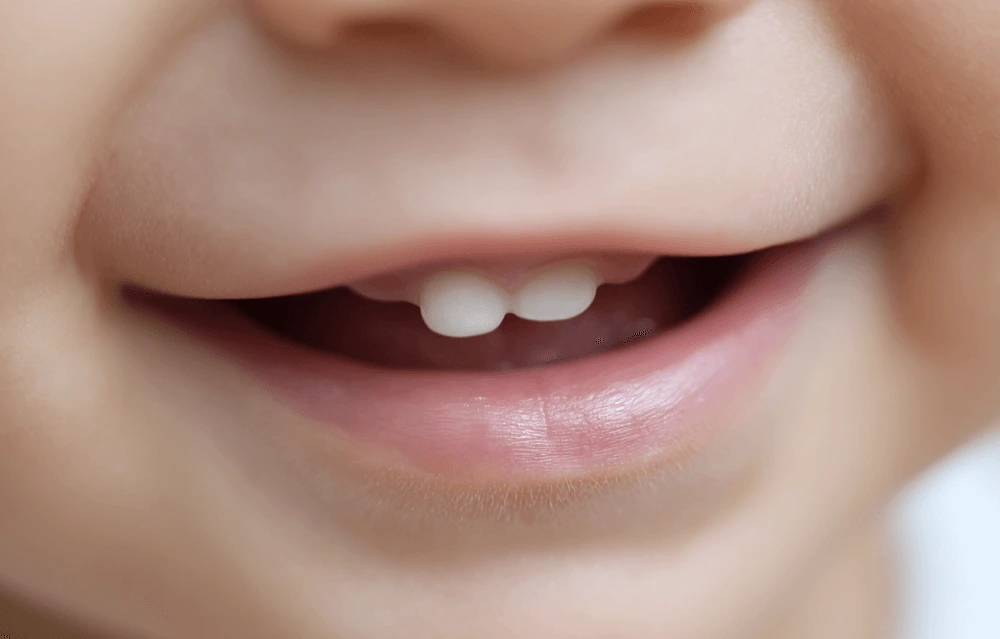
This is the most important rule: The AAPD recommends a child’s first dental visit should be within six months of their first tooth erupting, or by their first birthday—whichever comes first.
Why so early? This visit is not about “drilling and filling.” It’s about prevention and comfort.
What to expect: We call it a “lap visit.” You’ll hold your child on your lap while we do a quick, gentle check. We’ll count their teeth, check their gums, and, most importantly, we’ll talk with you. We’ll answer your questions about teething, brushing, and diet. It’s about establishing a happy, fear-free “Dental Home” for your child.
Brushing for Babies & Toddlers (Ages 0-3)
Before Teeth (0-6 months): You can start right away! Gently wipe your baby’s gums with a clean, damp washcloth or piece of gauze after feedings. This clears away sugar and bacteria and gets them used to having their mouth cleaned.
First Tooth (6-36 months): As soon as that first tooth pokes through, it’s time to start brushing twice a day with a soft-bristled baby toothbrush.
The Toothpaste Rule (ADA):
Under Age 3: Use a tiny “smear” of fluoride toothpaste (the size of a single grain of rice).
Ages 3-6: You can increase this to a “pea-sized” amount.
You will need to do the brushing for them until they have the dexterity to do it well on their own (usually around ages 7-8).
Beyond the Brush: 3 More Keys to Children's Dental Health
1. Diet & Snacking
Cavities are caused by bacteria that feed on sugar and produce acid. The frequency of snacking is just as important as what they eat. Sipping on a sippy cup of milk or juice all day constantly bathes the teeth in sugar.
Pro-Tip: Stick to meal and snack times. In between, the best drink is always water.
2. Pacifiers & Thumb Sucking
These are normal, self-soothing habits. According to the AAPD, they generally won’t cause any dental problems as long as the habit stops by age 3.
If it continues after their permanent teeth start to arrive, it can affect alignment. If you’re concerned, let us know—we can help.
3. Fluoride & Sealants
Think of fluoride as a vitamin for teeth; it makes enamel stronger and more resistant to acid. Sealants are a thin, protective coating we “paint” onto the deep grooves of new molars (the most cavity-prone teeth). They are a fast, painless, and clinically proven to be highly effective way to prevent cavities.
What Is a "Pediatric Dentist"? (And Why It Matters)
This is a key part of children’s dental health. A pediatric dentist is not just a general dentist who is “good with kids.”
A pediatric dentist completes an additional 2-3 years of specialized residency training after dental school.
This specialty training focuses on:
Child Psychology & Behavior: Making dental visits positive, fun, and fear-free.
Growth & Development: We are trained to spot and manage potential issues with jaw growth or tooth eruption early.
Special Needs Care: We have extensive experience and training to provide compassionate, effective care for children with special healthcare needs.
Our entire office, from the waiting room to our equipment, is designed to make children feel comfortable and excited about oral care.
Your Partner in Children's Dental Health in Greenspoint
Our goal is to be your partner through every stage, from that first tiny tooth to their teenage years. We also know that accidents happen. If your child has a dental emergency, like a knocked-out tooth or severe pain, please call us immediately for guidance.
Our Greenspoint Dental team is proud to serve families in Greenspoint and the surrounding Houston communities.”